
Role of Air Filters in Commercial HVAC
In a commercial environment, the air filtration system serves as the primary mechanical barrier between the indoor atmosphere and the sophisticated internal components of the HVAC infrastructure. Unlike residential systems, commercial rooftop units and air handlers process massive volumes of air to meet stringent ventilation codes and occupancy requirements. The air filter is engineered to capture a wide spectrum of airborne particulates, including outdoor pollutants, textile fibres, and biological contaminants, before they can enter the heat exchangers and blower assemblies.
Filtration and Airflow Control
The efficiency of a commercial HVAC system is fundamentally tied to the resistance of its filtration media. Filters are rated by the Minimum Efficiency Reporting Value (MERV), which indicates the size of particles they can effectively trap. However, as a filter performs its duty, it becomes a collection point for debris, which naturally increases the static pressure within the ductwork. For a commercial system to maintain the correct balance of outdoor air intake and indoor air recirculation, the filters must allow for a consistent and predictable velocity of air. If the filtration stage becomes a physical bottleneck, the entire thermodynamic cycle of the heating and cooling process is disrupted.
Impact of Dirty Filters on System Performance
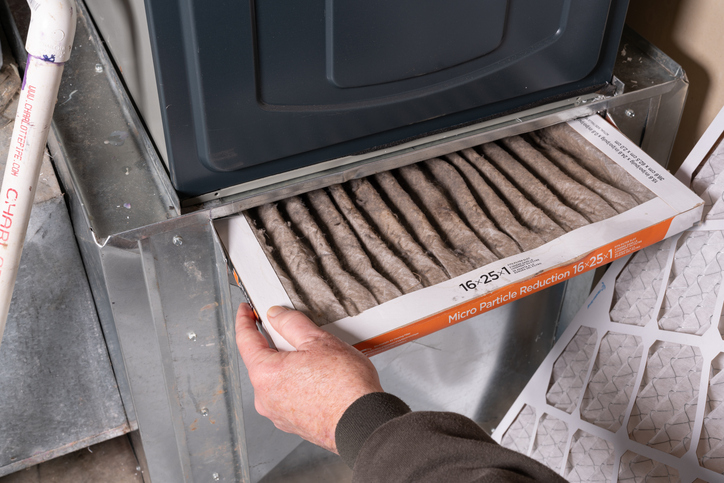
The transition from a clean filter to a saturated one has a direct and measurable impact on the mechanical health of the unit. At Air In Motion Heating + Cooling, technical assessments of commercial equipment often reveal that the primary cause of emergency service calls is a neglected filtration schedule. When air cannot pass through the filter at the engineered flow rate, the blower motor must consume significantly more amperage to overcome the resistance. This increased electrical load generates excess heat within the motor windings, leading to premature insulation breakdown and eventual motor failure.
Airflow Restriction and Efficiency Loss
Airflow restriction is a progressive issue that places every internal component under duress. When the volume of air passing over the evaporator or heat exchanger is insufficient, the following mechanical stresses occur:
- Evaporator Coil Freezing: In the cooling cycle, a lack of airflow prevents the refrigerant from absorbing enough heat, causing the condensation on the coil to turn into ice.
- Heat Exchanger Overheating: In the heating cycle, the stagnant air fails to pull heat away from the metal surfaces, causing the unit to trip its high-limit safety switches.
- Short-Cycling: The system turns on and off frequently as it hits safety limits, which accelerates wear on the gas valve and compressor contactors.
- Compressor Damage: Liquid refrigerant can migrate back to the compressor if it is not boiled off in the evaporator, leading to catastrophic “slugging” and valve failure.
Ensuring that the air path remains clear is a non-negotiable requirement for maintaining the system’s baseline efficiency and preventing expensive mechanical repairs.
Effects on Indoor Air Quality
Commercial spaces are subject to high occupant density, which increases the biological and particulate load on the air. When filters are not changed regularly, they reach a point of “bypass” or “blow-through,” where the pressure differential becomes so great that contaminants are forced around the edges of the filter frame or through the media itself. This allows dust and allergens to settle on the internal wet surfaces of the cooling coils and the interior of the ductwork, where they can become a breeding ground for biological contaminants.
Air In Motion Heating + Cooling technicians emphasize that a dirty filter is no longer a cleaning tool; it becomes a secondary source of pollution. As the air struggles to move through a clogged filter, it can pick up odours and fine particulates from the accumulated debris, distributing them to every occupied zone in the building. This circulation of contaminants can lead to “sick building syndrome,” where occupants experience respiratory irritation and decreased productivity due to poor air quality. Maintaining a fresh filtration stage is the most cost-effective method for sanitizing the air that employees and customers breathe.
Circulation of Contaminants
The relationship between filtration and hygiene is critical in spaces like retail outlets, offices, and healthcare facilities. High-efficiency filters capture microscopic irritants, but only if the air velocity remains within the designed parameters. If the system is bypassed due to a clogged filter, the most dangerous fine particulates—those that are deep-lung irritants—remain suspended in the air. Regular filter changes break this cycle of re-contamination, ensuring that the HVAC system remains a purification tool rather than a distribution network for legacy dust and allergens.
Maintenance Schedules and Best Practices
Developing a rigorous maintenance schedule for filter replacement is an essential part of commercial facility management. The frequency of these changes is not a universal constant; it depends on the local environment, the type of business, and the specific MERV requirements of the equipment. A retail space near a high-traffic construction zone will require more frequent interventions than a sealed office environment in a suburban area.
Replacement Frequency
Technical best practices suggest that commercial filters should be inspected monthly and replaced at least quarterly, though high-demand environments may require monthly changes. Factors that influence this frequency include:
- Occupancy Levels: Higher foot traffic introduces more fibres and organic debris into the return air.
- Outdoor Environment: Proximity to industrial areas or heavy vegetation increases the load of soot and pollen.
- Operating Hours: Systems that run 24/7 process twice as much air as those on a standard 12-hour business schedule.
- Filter Type: Pleated high-capacity filters have more surface area than standard glass-fibre models and can hold more debris before reaching a critical pressure drop.
Implementing a documented schedule ensures that the filtration stage is always proactive rather than reactive, protecting the mechanical investment of the building.
What Makes Us Unique
Air In Motion Heating + Cooling provides a specialized technical approach to commercial filtration that focuses on the physics of airflow and static pressure. We believe that filter management should be an integrated part of a comprehensive system optimization strategy.
Optimized Filtration Strategies
Our methodology involve more than just a physical swap of filters; we use manometers to measure the actual pressure drop across the filter bank to confirm that the selected media is compatible with the blower motor’s capabilities. This data-driven process ensures that the building achieves the highest possible air quality without exceeding the system’s engineered resistance limits. By focusing on the structural fit of the filters and the integrity of the seals, we prevent the “bypass” issues that often compromise commercial air handlers. This technical precision ensures that the HVAC infrastructure remains efficient and the indoor environment remains healthy.
Maintaining Efficient Airflow Systems
Securing the long-term performance of a commercial HVAC system requires a fundamental commitment to airflow hygiene. A filter change is the simplest yet most significant maintenance task that a business can perform to protect its mechanical assets. By ensuring that every motor and coil is protected from dust and debris, facility managers can reduce the risk of unexpected downtime and inflated energy costs. Maintaining these high standards of technical oversight is essential for the integrity of the mechanical systems.
Professional Assessment and System Stability
A professional assessment of your facility’s filtration needs provides the baseline for a stable and efficient HVAC system. By verifying that the air distribution loop is clear and that the filters are correctly specified for your equipment, you protect your business from the risks of poor air quality and mechanical strain. Maintaining these standards of technical excellence is a core part of the professional care provided by Air In Motion Heating + Cooling.