
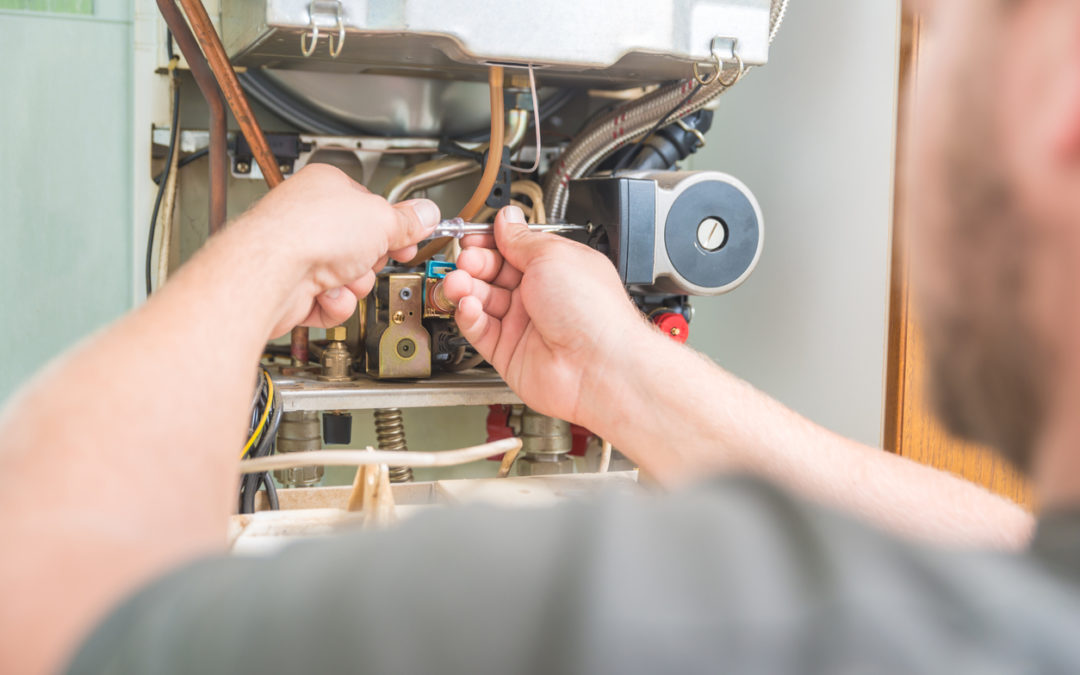
Here are some SIMPLE RULES TO GO BY:
RULE #1 PROPER DIAGNOSIS = PROPER REPAIR
We’ve all been there. That nervous feeling you get when you hear you furnace making funny noises, kicking on and off for no apparent reason or even worse, refuses to turn on no matter how much you play around with the thermostat.
You try to ignore it but you can’t. The fear starts to set in. It’s getting colder and colder outside. You live in Canada. What if this thing stops working all the sudden? What will you do? Will you and your family freeze to death because you didn’t deal with the problem in time?
You may decide to call an HVAC expert right away. Or, if you are feeling especially confident, you may turn to YouTube to figure out the problem for yourself.
A quick google search will tell you that a clogged furnace filter is a common issue. It can cause a furnace to shut off as dust and dirt restrict airflow. If the filter gets too clogged, the heat exchanger will overheat and shut off.
You change the filter and call it a day. Right? In the best-case scenario, Yes.
BUT WHAT IF the noise is from loose parts inside the furnace, the problem you are having continues and you and YouTube can’t figure out why.
If you’ve personally tried to troubleshoot the problem and can’t, you need to call a well-trained, well-trusted HVAC technician to properly diagnose the problem.
For example:
If the Furnace Pilot Light is Yellow
If you inspect your furnace and detect that the pilot light is yellow, it may well suggest the presence of carbon monoxide. A blue flame indicates the gas mixture is regular vs. a yellow flame indicates it is not.
If carbon monoxide is detected, a trained technician can determine whether the mechanical components of the furnace are causing the issue or energy connection from your house is the issue.
If the Thermostat is Acting Up
When your furnace stops heating the house effectively, the reaction of most homeowners is to raise temperature settings. But if this doesn’t work, the issue could be a defective thermostat, a dilemma with an intermittent pilot ignition, or even leaky ductwork. An experienced HVAC technician can run a full diagnostic on the furnace to identify the issue.
SOME COMMON FURNACE ISSUES are thermostat malfunctions, tripped breakers, blown fuses, temperature fluctuations, blower problems, and a blown-out pilot light.
Cost-Effective repairs are available for a number of common furnace problems. An experienced technician will know what to do.
Rule #2 PROPER REPAIR = PROPER SOLUTION
While it is so tempting to ignore the problem, hoping it will go away, the SMART THING is to do necessary furnace repairs as quickly as you detect trouble.
Not only does fixing a problem early prevent the issue from worsening, but early repair costs also tend to be minimal.
Depending on your level of HVAC mechanical knowledge, you may do some repairs yourself.
But you must consider that by doing the repairs yourself, you run a risk.
A reputable HVAC technician has their work protected by insurance policies. In the unlikely event these professionals unintentionally cause damage to your furnace, the insurance coverage will compensate you. This protects you from greater financial loss or frustration.
Once you’ve had a diagnostic performed by a professional you trust, a good HVAC technician will be able to clearly explain the issues, your options, their costs and their recommendation based on their years of experience.
Rule #3 LET THE MATH DECIDE
While there is no one solution fits all, there is a general rule of thumb to consider when you are making the decision to replace or repair equipment.
In simple terms, you must compare the cost of the repair to the cost of replacement, considered along with the age of the furnace itself.
That means the age of your furnace should be a major factor in your decision.
The average life span of a furnace is 15 to 20 years old, depending on the furnace make & model.
Common sense logic says that it’s much better to repair new equipment and replace old equipment. And so it goes that if your furnace is 10 years old or less, repairs can be effective BUT if your furnace is 12 years or older, it’s time to seriously consider a replacement.
Frequent repairs tend to increase considerably in the last two years of a furnace’s life.
If frequent fixes are needed, a replacement will be a better long-term financial solution.